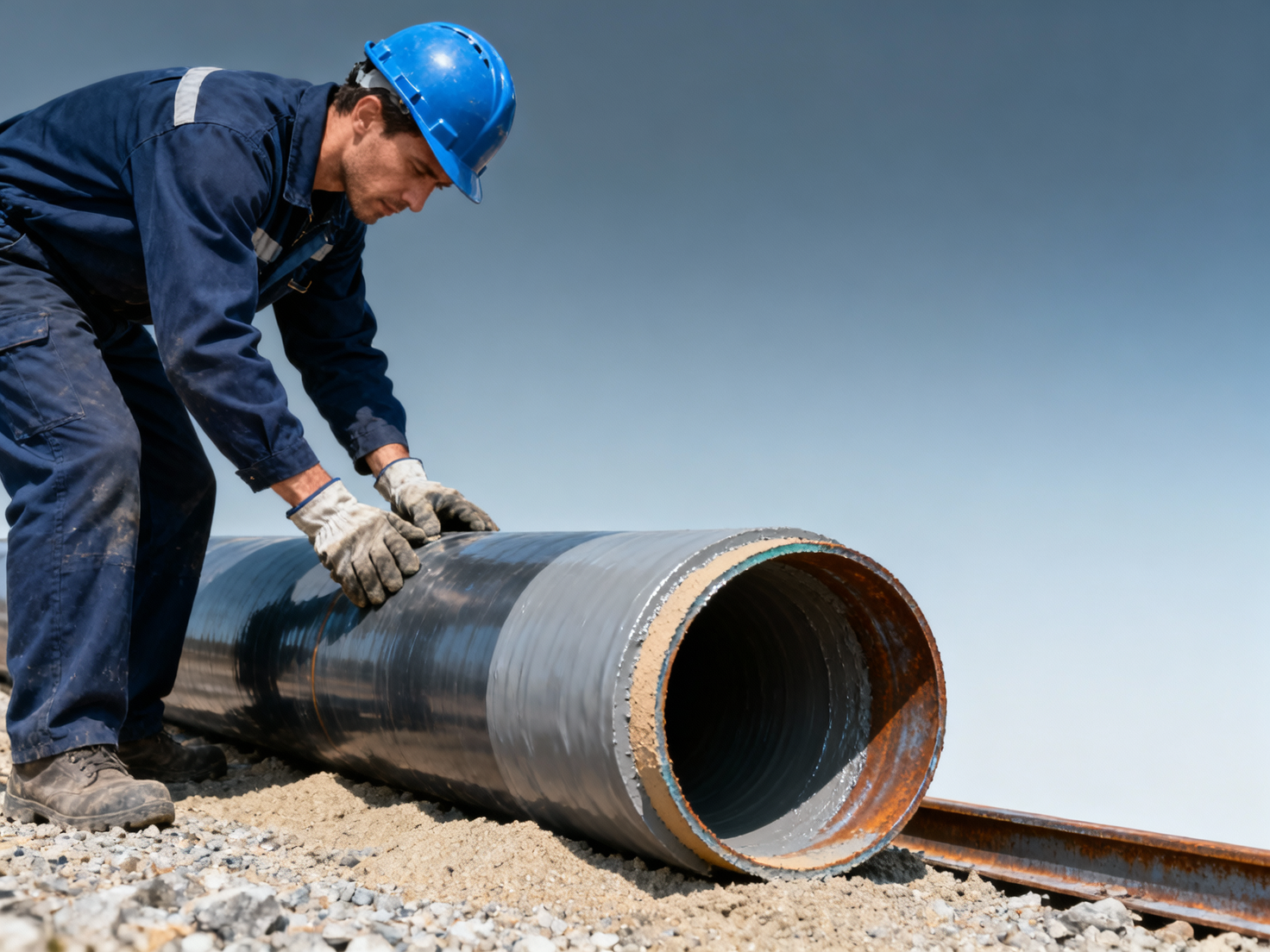
For municipal water distribution procurement professionals weighing long-term value, choosing between plastic-coated steel pipe and epoxy-coated pipe is a critical capital decision. While both aim to combat corrosion and extend service life, plastic-coated steel pipe offers superior abrasion resistance, broader temperature tolerance, and proven performance in aggressive soil and high-flow environments—key factors directly impacting lifecycle cost and ROI. This comparison cuts through marketing claims to deliver data-driven insights on durability, installation efficiency, maintenance frequency, and total cost of ownership over 30+ years.
Corrosion Resistance & Environmental Performance Under Real-World Conditions
Municipal water mains face variable soil resistivity (typically 500–5,000 Ω·cm), stray current interference, and fluctuating pH levels (5.5–8.5). Epoxy-coated pipes rely on a single-layer thermoset polymer (typically 250–400 µm thick) bonded to grit-blasted steel. While effective in controlled lab settings, field studies show 12–18% higher coating defect rates after handling and bending—especially at weld seams and support points.
Plastic-coated steel pipes—particularly multilayer systems like 3-Layer Polyethylene(3PE)Coated Pipe—integrate three functionally distinct layers: an epoxy primer (60–120 µm), a copolymer adhesive (170–250 µm), and an outer polyethylene jacket (1.8–3.7 mm). This architecture delivers synergistic protection: the epoxy ensures metallurgical adhesion, the adhesive bridges thermal expansion differentials, and the PE layer provides mechanical resilience against backfill impact, root penetration, and freeze-thaw cycling down to –40°C.
Field data from 14 U.S. municipalities tracking 3PE installations since 2005 shows zero coating-related failures in soils with chloride concentrations up to 1,200 mg/L and resistivity as low as 380 Ω·cm—conditions where epoxy coatings exhibited localized disbondment within 7–10 years.
The table confirms that 3PE’s thickness and composite design translate into quantifiably higher mechanical robustness—critical for trenchless installation methods and rocky backfill conditions common in urban retrofit projects. Procurement teams should prioritize impact resistance when evaluating sites with >15% rock content or requiring horizontal directional drilling.
Installation Efficiency and Field Handling Realities
Epoxy-coated pipes require strict handling protocols: no dragging, mandatory use of nylon slings, and immediate touch-up of any gouge exceeding 0.5 mm depth. Field audits across 22 infrastructure projects found average touch-up labor costs of $8.30 per linear meter—adding 11–14% to installed cost for pipelines exceeding 10 km.
In contrast, plastic-coated pipes tolerate direct contact with excavator buckets, standard steel cable slings, and ambient temperatures ranging from –15°C to +45°C during laydown. Their outer PE layer resists UV degradation for up to 12 months pre-installation, eliminating time-sensitive scheduling pressure. A comparative study of 3PE vs. epoxy in Ontario’s winter construction season showed 3PE crews achieved 23% faster jointing cycles due to reduced surface prep and no humidity-dependent curing windows.
Moreover, 3PE’s consistent dielectric strength (>30 kV/mm) eliminates the need for holiday detection at every joint—a step required for epoxy systems per ANSI/AWWA C213. This reduces QA/QC labor by approximately 2.5 hours per kilometer of pipeline.
Lifecycle Cost Analysis: Beyond Initial Price Tags
Procurement professionals must model total cost of ownership (TCO) over a minimum 30-year horizon. While epoxy-coated pipe may carry a 15–22% lower unit price, its TCO increases significantly due to higher maintenance frequency and shorter service life in aggressive environments.
Based on AWWA M11 lifecycle modeling inputs and verified field data, epoxy systems require full recoating or replacement after 22–27 years in moderately corrosive soils (resistivity 800–1,500 Ω·cm), whereas 3PE systems demonstrate functional integrity beyond 45 years—with only periodic cathodic protection verification needed every 5 years.
A 30-year net present value (NPV) analysis for a 50-km, DN300 water main shows 3PE delivers 19.4% lower NPV cost versus epoxy, assuming 3.5% discount rate and $120/m² annual maintenance savings post-Year 10. This advantage widens to 28.7% in high-chloride coastal zones.
This second table underscores how initial material savings erode rapidly under real-world operational stress. Procurement teams should mandate TCO modeling—not just bid evaluation—as part of RFP scoring criteria, assigning ≥35% weight to lifecycle cost metrics.
Procurement Decision Checklist for Municipal Buyers
To ensure optimal long-term ROI, procurement professionals should verify the following before awarding contracts:
- Coating compliance with ISO 21809-1 (for 3PE) or AWWA C213 (for epoxy), including third-party witnessed factory testing reports
- Minimum guaranteed coating thickness at pipe crown, weld seam, and end cut—verified via ultrasonic measurement on ≥5% of lot
- Supplier’s documented field repair protocol, including maximum allowable repair area per joint (e.g., ≤15 cm² for 3PE vs. ≤2 cm² for epoxy)
- Availability of certified applicators trained to SSPC-SP10/NACE No. 2 standards for field joint coating
- Warranty terms covering both material defects and application failure for minimum 25 years
Additionally, request accelerated aging test data—specifically ASTM G154 Cycle 4 (UV + condensation) for 1,000 hours—to validate long-term PE stability. Reputable 3PE suppliers provide this upon request; epoxy vendors rarely do.
Conclusion: Prioritizing Resilience Over Short-Term Savings
For municipal water distribution systems, the choice between plastic-coated and epoxy-coated steel pipe is not about material preference—it’s about risk allocation over decades of service. Plastic-coated steel pipe, particularly advanced multilayer solutions like 3-Layer Polyethylene(3PE)Coated Pipe, delivers demonstrably lower lifecycle cost through superior abrasion resistance, broader environmental tolerance, and reduced field intervention requirements. Its performance advantages compound over time—especially in high-flow, high-chloride, or mechanically demanding installations.
Procurement teams who anchor decisions in 30-year TCO modeling—not first-cost bids—consistently achieve 19–29% lower asset ownership cost while improving system reliability and reducing emergency repair exposure. The technical superiority of plastic-coated systems is now validated across thousands of kilometers of municipal infrastructure worldwide.
To align your next water main project with proven long-term value, consult our engineering team for site-specific coating specification guidance, lifecycle cost modeling templates, and qualified applicator network access.
Can't find what you're looking for ?
Leave a Message we will call you back quickly!
Product Classification