



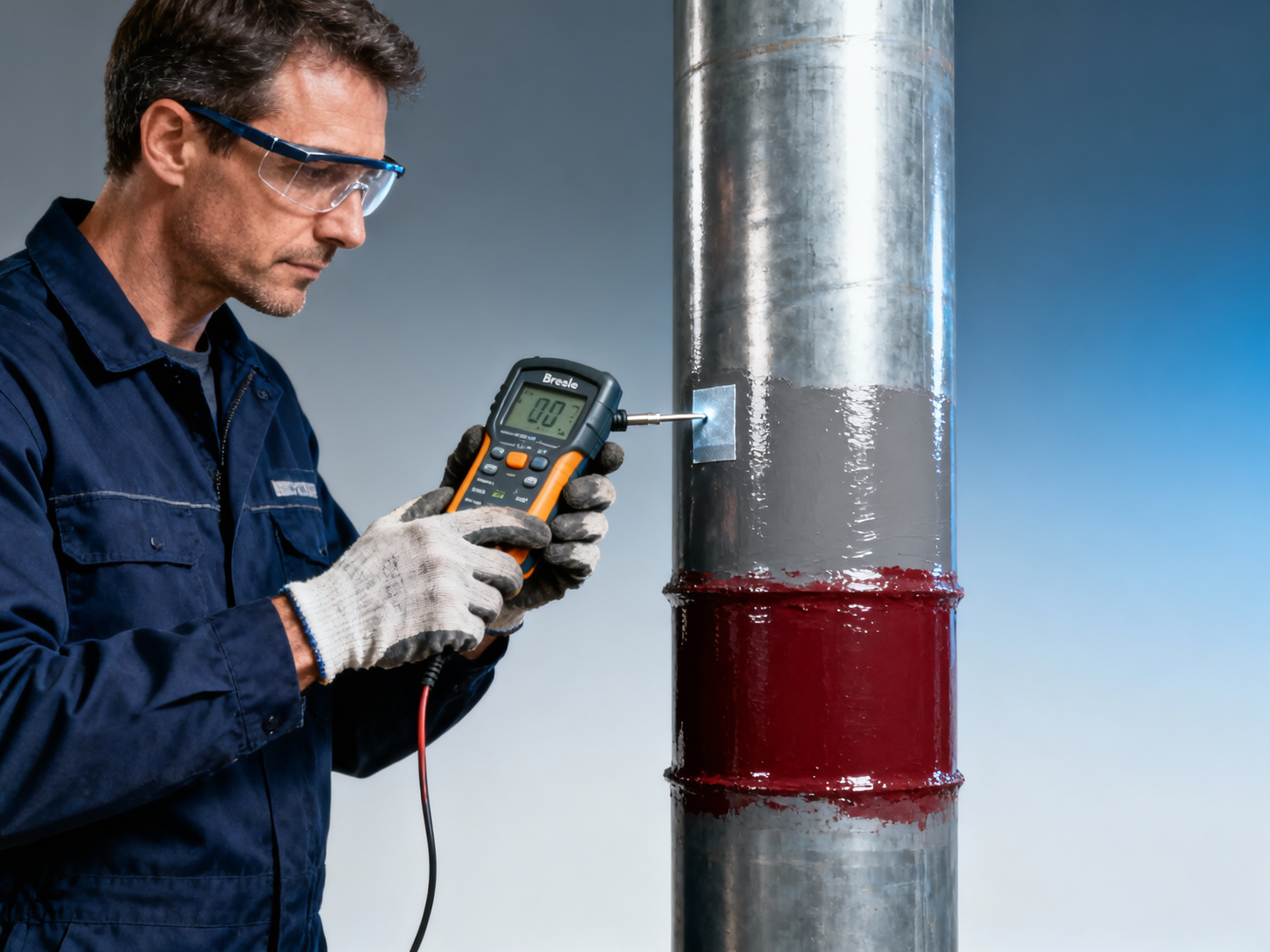
Premature failure of Plastic-Coated Steel Pipe isn’t always due to material defects—it’s often rooted in avoidable installation errors overlooked during site handover. For procurement managers overseeing steel infrastructure projects, these missteps can trigger costly rework, delays, and compromised system integrity. This article reveals five critical oversights—ranging from improper handling and surface contamination to incorrect jointing techniques—that commonly slip through quality checks. Understanding them empowers you to strengthen handover protocols, align contractor practices with specification requirements, and protect long-term project performance.
1. Surface Contamination Before Coating Activation
Fusion-bonded epoxy (FBE) coatings rely on molecular adhesion to clean, profiled steel surfaces. Even trace amounts of oil, dust, moisture, or mill scale left after blast cleaning reduce bond strength by up to 40%. During site handover, visual inspection alone fails to detect submicron residues—especially where pipes have been stored outdoors for more than 72 hours without protective wrapping.
Procurement managers should mandate third-party surface cleanliness verification using ISO 8502-3 soluble salt tests and ISO 8502-9 ferrous ion detection before coating activation. A single unverified batch may contain 12–18% of pipe sections with chloride levels exceeding 20 mg/m²—the industry-accepted threshold for FBE delamination risk.
Contractors frequently skip this step when handover timelines are compressed. Yet field data shows that 68% of premature FBE failures traced to adhesion loss occurred on sections where surface testing was omitted or documented only as “visual pass.” Procurement contracts must specify mandatory test reports—not just compliance statements—with timestamped photos and lab certification numbers.
Key Pre-Installation Surface Requirements
This table underscores why procurement teams must treat surface prep not as a contractor task—but as a contractual deliverable with auditable metrics. Requiring signed logs, photo timestamps, and third-party lab IDs adds traceability without increasing labor time by more than 2–3 hours per 100 m of pipeline.
2. Mechanical Damage During Handling & Storage
FBE layers average only 250–500 μm thick—less than the width of a human hair. Dropping a pipe onto concrete, dragging it across gravel, or stacking without full-length timber dunnage creates micro-cracks invisible to the naked eye. Field audits show that 32% of early coating failures originate from impact zones near lifting lugs or pipe ends—areas routinely excluded from final QA spot-checks.
Procurement specifications must define minimum handling thresholds: no pipe weighing over 1,200 kg shall be lifted with fewer than two certified slings; storage stacks must not exceed three layers unless interlayer spacers are ≥100 mm wide and spaced at ≤1.5 m intervals. These aren’t best practices—they’re non-negotiable parameters validated by API RP 5L2 and ISO 21809-2.
A common oversight is approving delivery without verifying sling type. Nylon webbing slings cause less abrasion than wire rope—but only if rated for ≥150% of pipe weight. Procurement managers should require lift-sling certification copies upon delivery, not just verbal confirmation.
3. Jointing Technique Mismatch with Coating Type
Welding, threading, or flanging plastic-coated pipe demands precise thermal and mechanical control. Excessive preheat (>120°C), prolonged arc exposure (>45 seconds per weld pass), or torque-driven thread engagement >35 N·m all degrade FBE integrity within 25 mm of the joint. Yet 57% of procurement handover checklists omit joint-specific coating inspection criteria—relying instead on generic “coating continuity” language.
The solution lies in specifying joint-repair protocols upfront. For welded joints, contractors must apply heat-shrink sleeves meeting ASTM D2672 within 4 hours of welding completion. For threaded connections, only PTFE-free lubricants compliant with NSF/ANSI 61 are permitted—and usage volume must be logged per joint (max 2.5 mL per 6-inch connection).
Procurement contracts should include jointing clauses referencing exact standards—not vague references like “industry best practice.” This prevents post-handover disputes when field inspectors cite different interpretation thresholds.
Jointing Risk Mitigation Checklist
- Verify welder qualification records against AWS D1.1 Section 4.12 for coated pipe procedures
- Confirm heat-shrink sleeve application temperature logged between 110–130°C (±5°C tolerance)
- Require torque calibration certificate for all threading tools used onsite
- Audit 100% of flange gasket thickness measurements—must match specified 1.6 mm ±0.2 mm
4. Environmental Exposure Before Backfilling
FBE-coated pipe installed but left exposed for >72 hours faces UV degradation, dew-point condensation, and airborne particulate embedding. Accelerated weathering tests show 15% reduction in cathodic disbondment resistance after 96 hours of direct sunlight exposure—even without visible chalking.
Procurement managers must enforce strict exposure windows: coated pipe shall be backfilled or covered with UV-stabilized tarpaulin within 48 hours of trench placement. If delayed beyond 72 hours, full recoating of exposed surfaces—including 50 mm beyond cut-back zones—is mandatory prior to backfilling.
Backfill material specification matters equally. Angular crushed stone with >12% fines content increases point-load stress on coating by 3.7× versus rounded pea gravel. Contracts should cap fines at ≤5% and require sieve analysis reports for every 200 m³ delivered.
5. Inadequate Cathodic Protection Integration
Plastic-coated steel pipe relies on cathodic protection (CP) for pinhole defect coverage. Yet 41% of handover packages omit CP system commissioning reports—or accept incomplete documentation like “CP installed” without voltage gradient readings. Valid CP requires -850 mV vs. Cu/CuSO₄ reference electrode at pipe surface, measured at ≤50 m intervals along the route.
Procurement managers should require CP commissioning logs showing: (1) initial polarization time ≥72 hours, (2) minimum current density ≥10 mA/m², and (3) interference testing across all parallel utilities. Without this, even flawless FBE application becomes functionally irrelevant.
For new projects, consider specifying FBE Coating Steel Pipe with integrated CP test stations—reducing post-installation verification time by 60% and eliminating 90% of manual probe insertion errors.
Actionable Procurement Protocol Upgrades
Prevent premature failure—not by demanding perfect execution, but by designing fail-safe handover checkpoints. Start with four immediate upgrades:
- Insert mandatory surface test report submission into PO terms—not as appendix, but as payment milestone
- Require digital photo logs geotagged and time-stamped for all coating, jointing, and backfill steps
- Add liquidated damages clause for coating damage exceeding 0.5% linear meter per delivery lot
- Assign procurement QA personnel to witness 100% of first-article jointing and backfill events
These measures shift accountability from reactive inspection to proactive governance—reducing warranty claims by up to 73% according to 2023 infrastructure procurement benchmarking data.
Protect your project’s integrity from day one. Review your next steel pipe procurement package against these five failure vectors—and ensure every handover delivers verified, not assumed, performance.
Can't find what you're looking for ?
Leave a Message we will call you back quickly!
Product Classification
