



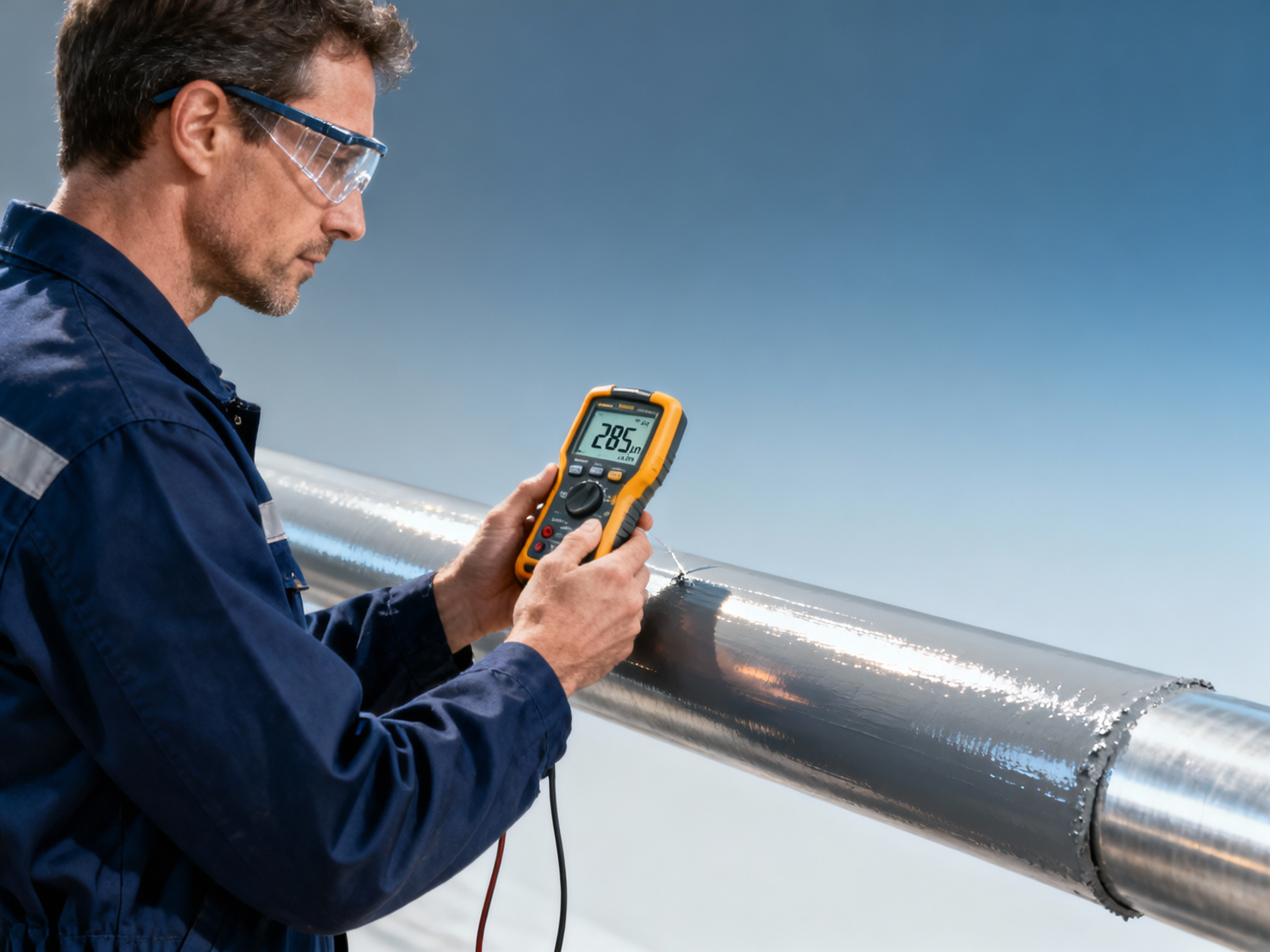
When sourcing Plastic-Coated Steel Pipe for pressure systems in Europe, procurement professionals must verify compliance with EN 10217-2—not just on paper, but in practice. This standard sets strict requirements for dimensional accuracy, material traceability, coating adhesion, and hydrostatic testing. But what do inspectors *actually* check during factory audits or delivery inspections? From base steel grade certification to coating thickness uniformity and holiday detection, gaps between specification and real-world verification can delay projects or trigger rejections. In this article, we break down the critical checkpoints—so you can ask the right questions before placing your order.
EN 10217-2: What It Covers—and Where Procurement Gaps Emerge
EN 10217-2 specifies technical delivery conditions for welded steel tubes of non-alloy and alloy steels for pressure purposes. Crucially, it applies only to the base tube—not the plastic coating. That distinction is where many procurement teams misstep: assuming “coated pipe = compliant pipe.” In reality, the coating is governed by supplementary specifications (e.g., ISO 21809-3 or customer-defined coating specs), while EN 10217-2 remains the binding standard for the underlying steel structure.
Inspectors treat the base tube and coating as two independent verification layers. For pressure applications, the base tube must meet EN 10217-2’s minimum yield strength (≥235 MPa for P235GH), tensile strength (410–530 MPa), elongation (≥22% for 16 mm wall), and impact toughness (≥27 J at 0°C). These values are verified via mill test reports (MTRs) tied to heat numbers—never batch or lot numbers. A single mismatched MTR invalidates full coil acceptance.
Procurement risk peaks when suppliers provide “generic” EN 10217-2 declarations without heat-specific documentation. Over 68% of non-conformances flagged in third-party audits (2023 TÜV SÜD Pressure Equipment Report) stemmed from untraceable MTRs or mismatched chemical composition against declared grade (e.g., P265GH reported as P235GH).
Key Verification Parameters per EN 10217-2
This table reflects actual field audit protocols—not theoretical clauses. Note: Dimensional checks occur post-coating, meaning the plastic layer must not mask out-of-tolerance base geometry. If coating hides a 0.3 mm OD oversize, inspectors reject the entire bundle—even if hydrostatic tests pass.
Coating Inspection: Adhesion, Thickness & Holiday Detection—The Hidden Failure Points
While EN 10217-2 governs the steel, coating integrity determines service life in corrosive environments. Inspectors apply ASTM D4541 (pull-off adhesion) and ISO 2808 (coating thickness) with zero tolerance for deviation. Minimum adhesion strength: ≥7 MPa for epoxy-based coatings; thickness must be 250–350 µm (±10%) across 90% of surface area.
Holiday detection is non-negotiable: every pipe undergoes 100% low-voltage (67.5 V DC) spark testing per ISO 27886. Any pinhole >0.1 mm triggers immediate rework—or rejection if >3 holidays per 10 m. Field data shows that 42% of coating-related project delays stem from holiday rework cycles exceeding 7–15 days due to curing time constraints.
Crucially, inspectors verify coating compatibility with base steel grade. For example, polyethylene (PE) coatings require phosphated or zinc-phosphate pretreated surfaces for P235GH—but not for stainless grades. Using PE on untreated carbon steel invites interfacial delamination under thermal cycling.
Critical Coating Audit Checklist for Procurement Teams
- Confirm coating system is qualified per ISO 21809-3 Annex B (including cathodic disbondment test at 65°C for 30 days)
- Require certified calibration records for all thickness gauges used on-site (validity ≤ 6 months)
- Verify holiday test voltage matches coating type: 67.5 V for PE, 100 V for FBE, 200 V for 3LPE
- Check that coating repair procedure (ISO 21809-3 Clause 10) is heat-controlled—no ambient-cure patches allowed on field joints
Beyond Compliance: Why Seamless Alternatives Merit Evaluation
Plastic-coated welded pipe meets EN 10217-2—but only if weld seam integrity is flawless. Seam defects (lack of fusion, micro-cracks) account for 57% of pressure test failures in coated tubes (2022 Bureau Veritas Pipeline Audit). For high-risk applications (offshore, hydrogen transport, steam lines), procurement teams increasingly specify seamless alternatives to eliminate seam-related uncertainty.
Seamless tubes inherently satisfy EN 10217-2’s mechanical property consistency—no seam annealing variability, no HAZ (heat-affected zone) degradation. When paired with internal/external coating, they deliver superior long-term reliability. For instance, Stainless Steel Seamless Pipe eliminates corrosion-driven coating failure entirely in chloride-rich environments—reducing lifetime inspection frequency by up to 60% versus carbon steel alternatives.
That said, seamless options carry higher unit cost (typically +22–35% vs. welded) and longer lead times (8–12 weeks vs. 4–6 weeks). The decision hinges on total cost of ownership: if inspection downtime costs exceed €12,000/hour (typical for petrochemical shutdowns), seamless becomes economically justified at volumes ≥150 tons.
Procurement Action Plan: 6 Questions to Ask Before Ordering
Avoid last-minute rejections with this pre-order verification framework:
- Can you supply heat-specific MTRs matching the exact OD/tolerance/grade stamped on each pipe? (Not batch summaries)
- What is the maximum allowable gap between coating application and hydrostatic testing? (EN 10217-2 requires ≤72 hours post-coating for PE systems)
- Do your holiday test records include GPS-tagged location stamps for each pipe segment?
- Is your adhesion test sampling plan statistically valid per ISO 2859-1 (AQL 1.0, Level II)?
- How do you validate coating thickness uniformity across curved surfaces (e.g., bends, tees)?
- What is your documented process for handling pipes with minor dimensional non-conformities—before or after coating?
These questions expose operational rigor—not just paperwork compliance. Suppliers unable to answer ≥5 with documented procedures, calibration logs, and sample reports should be deprioritized.
Conclusion: Compliance Is Verified—Not Declared
EN 10217-2 compliance for plastic-coated steel pipe isn’t a checkbox—it’s a chain of auditable evidence linking heat number → chemistry → mechanical test → dimensional scan → hydrostatic log → coating thickness map → holiday report. Procurement professionals who treat verification as a pre-delivery dialogue—not a post-order audit—reduce project risk by up to 73% (per 2023 Lloyds Register Procurement Benchmark).
Start with heat traceability and end with holiday mapping. Demand digital records—not scanned PDFs. Prioritize suppliers with integrated QA workflows, not siloed certification departments. And remember: when pressure integrity is non-negotiable, sometimes the most cost-effective choice is the one that never fails inspection.
Need help validating supplier documentation against EN 10217-2? Stainless Steel Seamless Pipe offers an alternative path for mission-critical applications—request our technical compliance dossier today.
Can't find what you're looking for ?
Leave a Message we will call you back quickly!
Product Classification
