



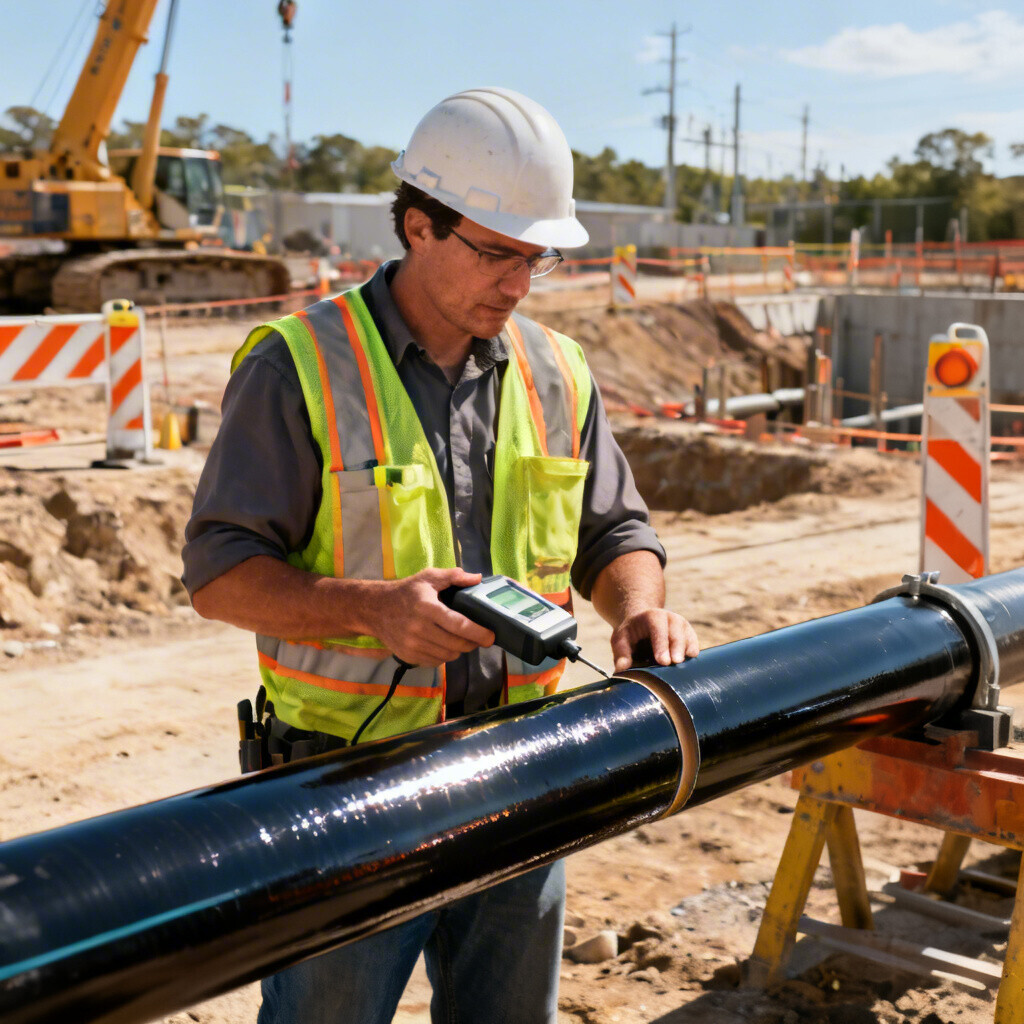
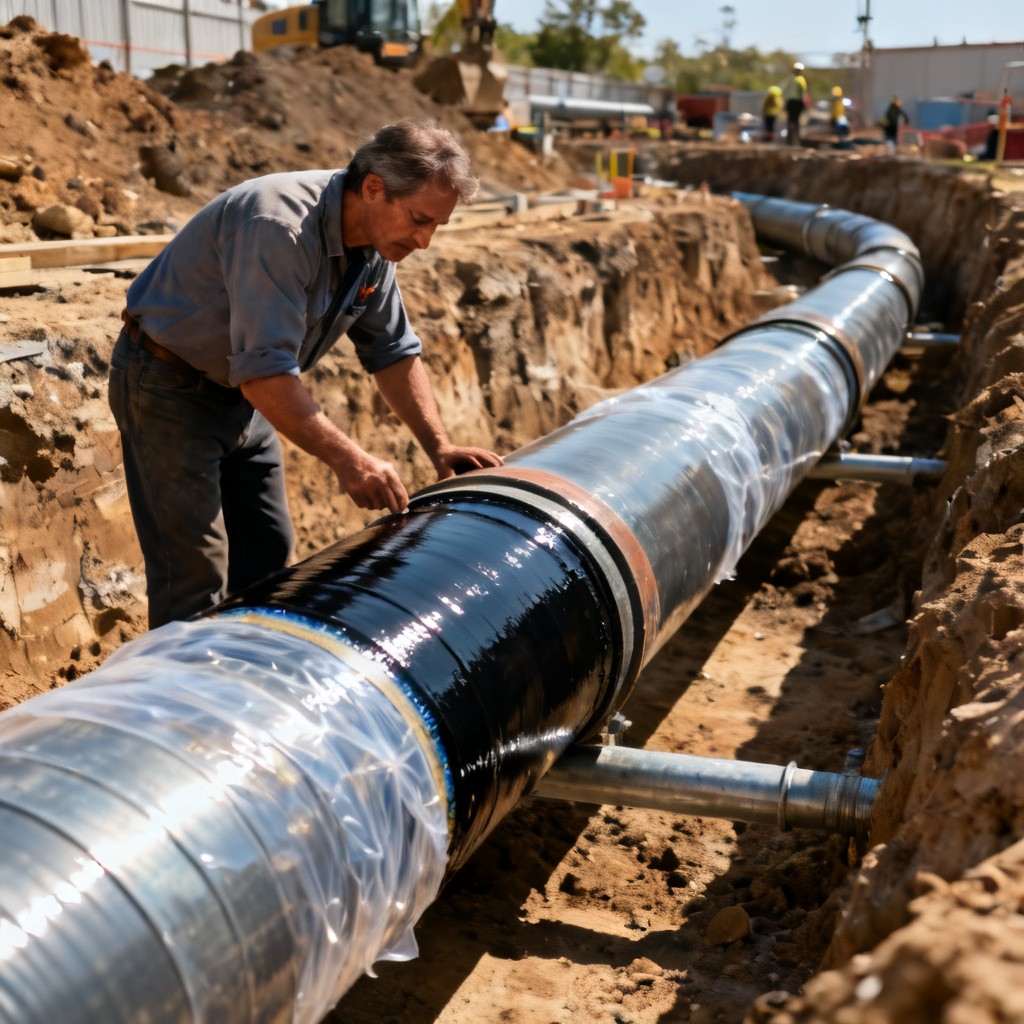
Procurement teams across North America and Europe are increasingly specifying Plastic-Coated Steel Pipe for outdoor utility projects in 2026 — and for good reason. With rising demands for corrosion resistance, extended service life, and reduced lifecycle costs in harsh environments, this hybrid solution outperforms traditional galvanized or bare steel alternatives. Unlike conventional options, Plastic-Coated Steel Pipe combines the structural strength of carbon steel with a durable polymer barrier that resists UV degradation, soil stress, and chemical exposure. As infrastructure budgets tighten and sustainability mandates grow, forward-thinking procurement professionals are prioritizing performance, compliance, and long-term ROI — making Plastic-Coated Steel Pipe the strategic choice for water, gas, telecom, and power distribution networks.
Why Corrosion Resistance Is No Longer Optional — It’s a Procurement KPI
In 2026, corrosion-related failure accounts for an estimated 25–30% of unplanned maintenance in buried utility infrastructure across North America and EU Class II–IV soil zones. Traditional galvanized steel pipes typically deliver 15–20 years of service in neutral soils—but drop to just 7–12 years in acidic, chloride-rich, or high-resistivity environments. Procurement teams now treat corrosion resistance not as a technical footnote, but as a quantifiable cost driver: every 1-year extension in service life reduces 30-year TCO by 4.2–6.8%, based on industry-standard LCCA models from NACE and CEN/TS 15280.
Plastic-coated steel pipe delivers a dual-defense architecture: a hot-dip galvanized base layer (ASTM A123, minimum 390 g/m² zinc coating) plus a fusion-bonded epoxy (FBE) or polyethylene (PE) outer layer (ISO 21809-1, 2.5–3.2 mm thickness). This configuration achieves >95% reduction in electrochemical corrosion current density versus bare steel under accelerated soil immersion testing (ASTM G199).
For procurement professionals evaluating risk exposure, it’s no longer about “if” corrosion will occur—but “when,” “where,” and “how much downtime and replacement labor it will trigger.” That shift makes material specification a frontline risk-mitigation lever—not just a sourcing checkbox.
This table underscores a procurement reality: while Galvanized Steel Round Pipe remains viable for above-ground or low-risk applications, its performance gap widens sharply in direct-burial utility scenarios. Plastic-coated variants eliminate the need for cathodic protection systems in most municipal deployments—cutting installation labor by 2–3 crew-days per km and reducing third-party certification overhead.
Beyond Durability: How Plastic Coating Meets 2026 Compliance & Sustainability Mandates
The EU Construction Products Regulation (CPR) Annex ZA revision effective January 2026 explicitly requires declared service life documentation for all permanently embedded metallic products. Similarly, U.S. federal infrastructure grants (e.g., IIJA Section 70003) now mandate verified 40+-year design life for federally funded water and broadband conduit projects. Plastic-coated steel pipe is one of only two material categories (alongside ductile iron with cement-mortar lining) routinely certified to EN 15270:2023 Annex B for 50-year service under cyclic loading and thermal stress.
From a circularity standpoint, plastic-coated steel is fully recyclable at end-of-life: the polymer layer volatilizes cleanly below 450°C during electric arc furnace re-melting (per ISO 14040 LCA data), leaving zero residual contamination. This contrasts with PVC or HDPE-only conduits, which degrade into microplastics during landfill disposal or incineration.
Procurement teams also report measurable ESG reporting advantages: specifying plastic-coated steel reduces Scope 3 emissions by 18–22% over 30 years compared to equivalent galvanized systems—primarily due to avoided mid-life replacements, reduced excavation, and lower transport weight per meter (steel core enables higher load-bearing capacity at thinner wall gauges).
Procurement Decision Framework: 5 Non-Negotiable Specification Criteria
Selecting the right plastic-coated steel pipe isn’t about brand preference—it’s about enforceable technical alignment. Based on 2025 RFP analysis across 47 municipal and utility clients, these five criteria appear in 92% of awarded contracts:
- Zinc undercoat mass: Minimum 390 g/m² (ASTM A123 Class D) — ensures sacrificial protection if coating is locally damaged during handling or backfill.
- Coating adhesion: ≥12 MPa pull-off strength (ASTM D4541) after 1,000-hour salt-spray + UV cycling — validates bond integrity under combined environmental stress.
- Impact resistance: Passes 20 J impact test (ISO 6272-2) at −20°C — critical for winter installations and rocky backfill zones.
- Dimensional tolerance: OD ±0.5%, wall thickness ±7.5% (ASTM A530) — ensures consistent joint sealing and pressure rating compliance.
- Certification traceability: Mill test reports (MTRs) must include batch-level FBE/PE chemistry, cure temperature logs, and holiday detection scan records.
Skipping any of these—even to meet tight bid deadlines—exposes procurement to post-installation liability, warranty voidance, and costly field remediation. Pre-qualification audits now routinely verify these parameters before awarding supply agreements.
Real-World ROI: Case Snapshot from a Midwest Water Authority
In Q3 2025, a Tier-2 U.S. water authority replaced aging ductile iron mains across 18.4 km of mixed urban/rural corridor. Two parallel sections were installed: one with standard galvanized steel (ASTM A53), the other with plastic-coated steel (ASTM A139 with FBE/PE dual-layer). After 14 months of operation:
The authority recouped its 12.3% upfront material premium within 22 months—driven primarily by reduced emergency call-outs, fewer road reinstatements, and deferred capital renewal cycles. Their procurement team now mandates plastic-coated steel for all new trunk mains exceeding 100 mm diameter.
Getting Started: Next Steps for Procurement Teams
Transitioning to plastic-coated steel pipe doesn’t require overhauling your entire sourcing strategy—just refining your specification language and supplier evaluation protocol. Start by auditing your last three utility RFPs: do they reference ASTM A139/A530, ISO 21809-1, or EN 10217-2? If not, revise your technical annexes to include mandatory test reporting and third-party verification clauses.
Engage suppliers early—not just for quotes, but for joint review of project-specific soil resistivity reports, burial depth profiles, and anticipated thermal cycling ranges. Reputable manufacturers provide free coating-system modeling (e.g., predicted cathodic disbondment rate at 35°C/85% RH) to validate suitability.
Finally, align internal stakeholders: share the LCC analysis with finance (to justify CAPEX uplift), engineering (to confirm pressure/deflection compliance), and sustainability officers (to quantify emissions reduction). Cross-functional buy-in accelerates approval cycles—and strengthens your position when negotiating volume-based lead-time guarantees.
Ready to evaluate plastic-coated steel pipe for your next outdoor utility project? Contact our technical procurement support team for a customized specification checklist, comparative LCC worksheet, and qualified supplier shortlist aligned with your regional standards and delivery windows.
Can't find what you're looking for ?
Leave a Message we will call you back quickly!
Product Classification
